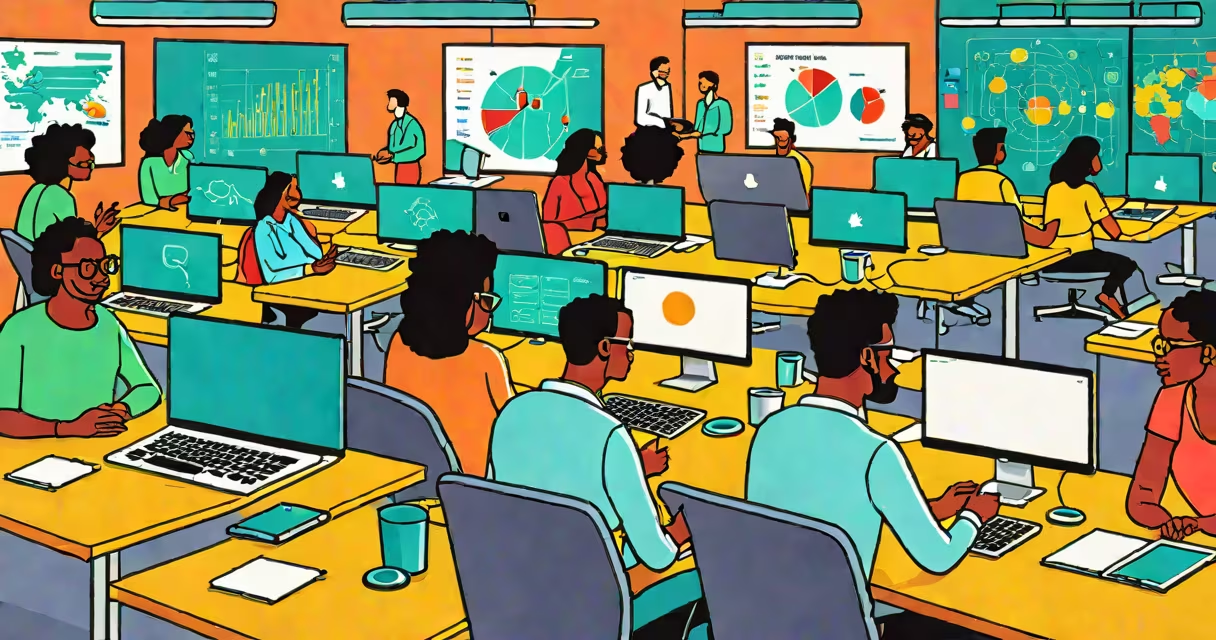
data scientist for all is a growing initiative that removes traditional barriers to entry in data science, emphasizing accessible training, equitable hiring practices, and real-world problem-solving over formal academic credentials. It promotes the idea that anyone with curiosity, analytical thinking, and foundational skills can contribute meaningfully to data-driven decision-making.
The term reflects a shift from elite, degree-heavy models of data science toward inclusive pathways. Instead of requiring advanced degrees in statistics or computer science, "data scientist for all" focuses on practical competencies such as data cleaning, visualization, basic modeling, and domain understanding. This model supports learners from non-traditional backgrounds-career changers, bootcamp graduates, and individuals from underrepresented communities-to enter the field on equal footing.
data scientist for all operates through structured learning paths that prioritize application over theory. Courses typically begin with data manipulation using tools like Python or R, then progress to exploratory data analysis, visualization with libraries like Matplotlib or Tableau, and finally, building predictive models using scikit-learn or TensorFlow.
Credentialing happens via portfolio development. Learners submit real datasets they've cleaned, analyzed, and presented with insights. These portfolios serve as proof of ability, replacing resumes filled with academic titles. A candidate who built a model predicting local food waste patterns using city open data files demonstrates applied skills more effectively than someone citing a master's thesis on regression algorithms.
Core components include free or low-cost online platforms, mentorship networks, and community-led learning groups. Platforms like Kaggle, GitHub, and freeCodeCamp host challenges and tutorials that simulate real industry problems. These environments allow learners to practice in safe, public spaces where feedback is immediate and peer review is standard.
Key tools include Jupyter Notebooks for coding, SQL for database queries, and cloud services like AWS SageMaker or Azure ML Studio. The rise of no-code/low-code tools such as DataRobot and RapidMiner enables users without programming experience to build models. While these tools don't replace deep technical knowledge, they lower the threshold for initial engagement.
A non-obvious fact: many successful data scientists in the "for all" model never took a single college course in statistics. Instead, they learned through guided projects, YouTube tutorials, and participation in hackathons. One participant in a 2023 Code for America challenge developed a tool to predict eviction risk in urban neighborhoods using publicly available housing and income data-without prior formal training. Her solution was adopted by a city planning department.
There are three primary models under the "data scientist for all" umbrella:
| Type | Focus | Typical Tools | Use Case Example |
|---|---|---|---|
| Business Intelligence Analyst | Reporting, dashboards, trend identification | Power BI, Excel, SQL | Tracking monthly sales performance across regions |
| Data Analyst (Entry-Level) | Descriptive analysis, data cleaning, visualization | Python, Pandas, Tableau | Identifying customer churn patterns in subscription services |
| Machine Learning Practitioner | Model training, evaluation, deployment | scikit-learn, TensorFlow, Azure ML | Predicting equipment failure in manufacturing plants |
Each role requires different levels of math and coding. Business intelligence analysts may use only basic formulas and drag-and-drop interfaces. Machine learning practitioners need to understand loss functions, overfitting, and hyperparameter tuning-but even they can start with pre-built templates and gradually build expertise.
For instance, a retail worker in Detroit used free resources from Microsoft Learn to create a model forecasting seasonal inventory demand. She trained it on historical sales data from her employer's system, improved accuracy by adding weather data, and presented results to store managers. Within three months, she was promoted to a part-time analytics coordinator role.
Many assume "data scientist for all" means lowering standards. That's incorrect. The goal is not to reduce rigor but to change accessibility. Competency remains high-the difference lies in how it's measured.
Also, the term doesn't imply everyone becomes a machine learning expert. Most roles involve interpreting data, identifying trends, and supporting decisions-not writing complex neural networks. A hospital data analyst using patient flow data to reduce emergency room wait times exemplifies impact without needing advanced AI.
I once led a workshop in rural Nebraska where participants had no prior coding experience. Over four weeks, we taught them to analyze local agricultural yield data using Excel and free web tools. One attendee, a high school teacher, built a dashboard showing crop success rates by soil type. He later presented it at a county fair. His work influenced a local grant proposal for sustainable farming initiatives. That outcome wasn't about code-it was about insight, relevance, and community trust.
data scientist for all redefines who can do data science. It replaces gatekeeping with opportunity, focusing on skill demonstration over pedigree. With structured learning, real projects, and inclusive hiring, people from all walks of life can contribute to data-driven innovation. The future of data science isn't just for PhDs-it's for everyone who wants to ask better questions and find clearer answers.