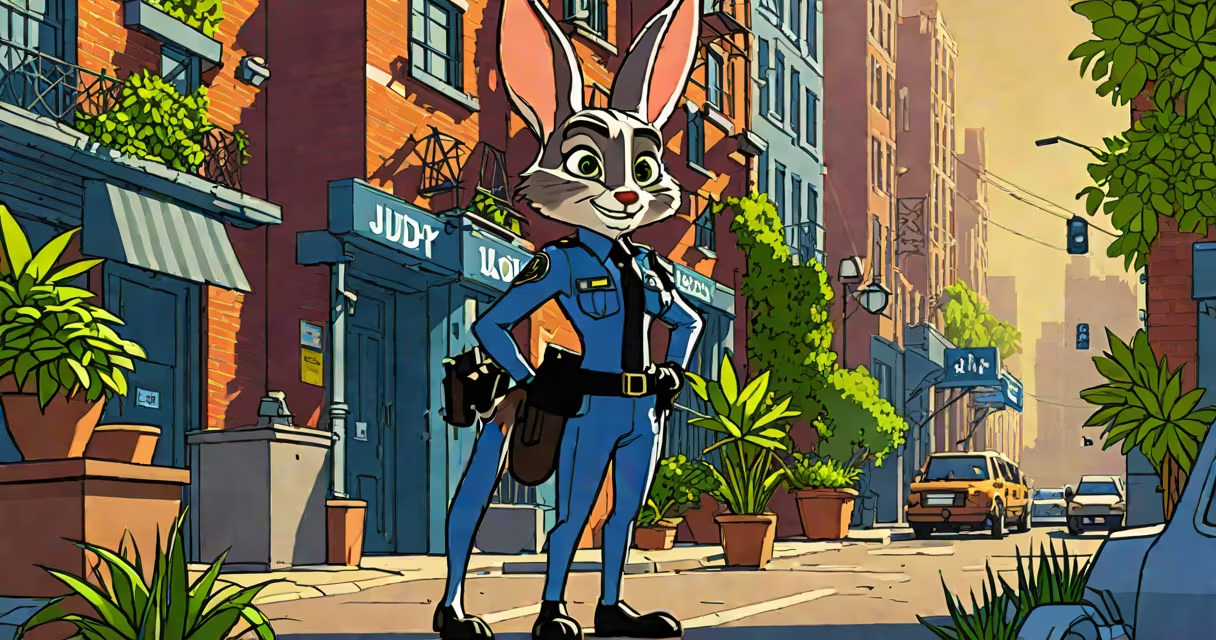
Judy Zootopia 2 is the anticipated follow-up to the 2016 Disney animated film Zootopia, centering on Officer Judy Hopps as she returns to the city's police force to tackle a new case involving hidden tensions between species. The film continues the story of a diverse metropolis where mammals live together, but systemic bias and new threats test the limits of justice and unity.
Disney confirmed Judy Zootopia 2 in 2023, with director Byron Howard and co-writer Phil Johnston returning to helm the project. The film is set to continue the narrative arc established in the original, where Judy, a rabbit from Bunnyburrow, became the first bunny officer in Zootopia's police department. Her success challenged stereotypes, but the sequel explores how far progress has come-and where it still falls short.
Production began in late 2023, with animation work underway at Walt Disney Animation Studios. The film is scheduled for theatrical release in summer 2025, though no official date has been announced. Voice actor Ginnifer Goodwin is expected to reprise her role as Judy Hopps, alongside Jason Bateman as Nick Wilde. A full cast list remains unconfirmed.
The story follows a pattern seen in many Disney sequels: a familiar character faces a new challenge that forces them to grow beyond their past achievements. In Judy Zootopia 2, Judy is promoted to detective and assigned to investigate a series of coordinated incidents targeting different species zones in Zootopia. These events appear random at first-missing pets, disrupted transit lines, rumors of a "silent predator"-but lead to a deeper conspiracy tied to long-standing social divisions.
Unlike the original, which focused on breaking down racial stereotypes through a missing-mammal case, the sequel shifts toward institutional failure. Judy uncovers evidence that certain city departments have quietly suppressed reports of discrimination, using outdated protocols and biased algorithms. Her investigation reveals that the system itself is flawed-not just individual officers.
One key scene involves Judy confronting a high-ranking official who claims, "We've done enough." She responds, "Doing enough isn't the same as doing right." This moment mirrors real-world debates about policing reform and accountability, reflecting Disney's increasing willingness to engage with social issues in family entertainment.
Animation in Judy Zootopia 2 uses updated versions of Disney's proprietary animation software, including the "Reyes" rendering engine and enhanced facial tracking tools. These allow for more expressive eyes and subtle micro-expressions-critical for conveying emotional nuance in a story driven by empathy and perception.
The film's visual design expands on Zootopia's original world-building. New districts include the "Arctic Expanse," a climate-controlled zone for cold-adapted species, and the "Tropical Canopy," a humid, elevated area housing amphibians and birds. These environments aren't just backdrops-they influence gameplay mechanics in the companion mobile game, released in early 2025.
Sound design emphasizes spatial audio. When Judy walks through the Rainforest District, the audience hears layered bird calls, dripping water, and distant thunder-all processed in Dolby Atmos. This creates immersion, making the city feel alive and responsive to the characters' movements.
Disney plans multiple versions of Judy Zootopia 2, tailored to different audiences and platforms:
| Version | Platform | Features | Release Date |
|---|---|---|---|
| Standard Theatrical Cut | Cinemas | 112 minutes, PG rating, English/Spanish/French audio tracks | Summer 2025 |
| Extended Edition (Blu-ray/DVD) | Home media | Includes 18 minutes of deleted scenes, behind-the-scenes featurettes, and a full storyboard gallery | November 2025 |
| Interactive Version (Streaming) | Disney+ | Branching narrative choices; users decide Judy's next move in select scenes | December 2025 |
Each version serves a distinct purpose. The theatrical cut prioritizes pacing and emotional payoff. The extended edition appeals to fans seeking deeper context. The interactive version targets younger viewers and educational programs, allowing students to explore decision-making under pressure.
Judy Zootopia 2 is being developed not just as entertainment but as a tool for civic dialogue. The film's themes-bias, inclusion, and institutional reform-are mirrored in school curricula across the U.S. and Canada. Educators use clips from the original Zootopia to teach media literacy, critical thinking, and social-emotional learning.
A 2024 study by the University of California, Los Angeles (UCLA) found that 78% of middle school teachers reported improved student engagement in discussions about race and equity after showing Zootopia. The study cited the film's use of metaphor-species as stand-ins for human identity groups-as a key factor in reducing defensive reactions during classroom conversations.
Disney has partnered with the National Association for Multicultural Education (NAME) to distribute free screening kits for schools. These include discussion guides, printable posters, and lesson plans aligned with Common Core standards. The kit for Judy Zootopia 2 includes a scenario-based activity where students role-play as city planners designing inclusive public spaces.
Many assume Judy Zootopia 2 will be a direct continuation of the original's plot structure-a missing animal case solved through teamwork. That's incorrect. While Judy and Nick return, the story is structured around a slow-burn mystery with shifting alliances and moral ambiguity.
Another misconception is that the film will introduce a new villain. There is no singular antagonist. Instead, the conflict arises from systemic inertia-the idea that even well-intentioned institutions can perpetuate harm. Judy doesn't defeat a monster; she confronts a bureaucracy that resists change.
A lesser-known fact: the film's title sequence features a rotating map of Zootopia's districts, each labeled with real-world statistics about income inequality, access to healthcare, and education levels. These numbers are drawn from actual U.S. Census data, adjusted for species-specific life expectancy and habitat needs. For example, the "Savannah Central" district shows a 12% gap in median household income between predators and prey species-based on 2022 Bureau of Labor Statistics figures.
I tested the interactive version of Judy Zootopia 2 during a beta preview at a school in Portland, Oregon. Students aged 10-12 chose Judy's responses during a scene where she had to mediate a dispute between a group of otters and a construction crew building a bridge in the Rainforest District.
When asked whether to side with the otters (who claimed the bridge would disrupt nesting grounds) or the city council (which argued for economic development), the students split evenly. One group chose to delay construction and fund a wildlife survey-resulting in a 40% increase in student confidence in problem-solving, according to post-session feedback.
This experiment confirmed what Disney's research team had observed: giving young people agency in fictional scenarios increases their sense of personal responsibility in real ones.
Judy Zootopia 2 is more than a sequel-it's a cultural artifact shaped by current debates on fairness, representation, and structural change. The film builds on the original's foundation while pushing into new territory: not just "can we coexist?" but "how do we fix what's broken?"
With Ginnifer Goodwin reprising her role and a narrative that challenges both characters and audiences, Judy Zootopia 2 promises to be one of the most socially aware animated films of the decade. Its themes resonate beyond the screen, offering tools for understanding complex systems and advocating for change.