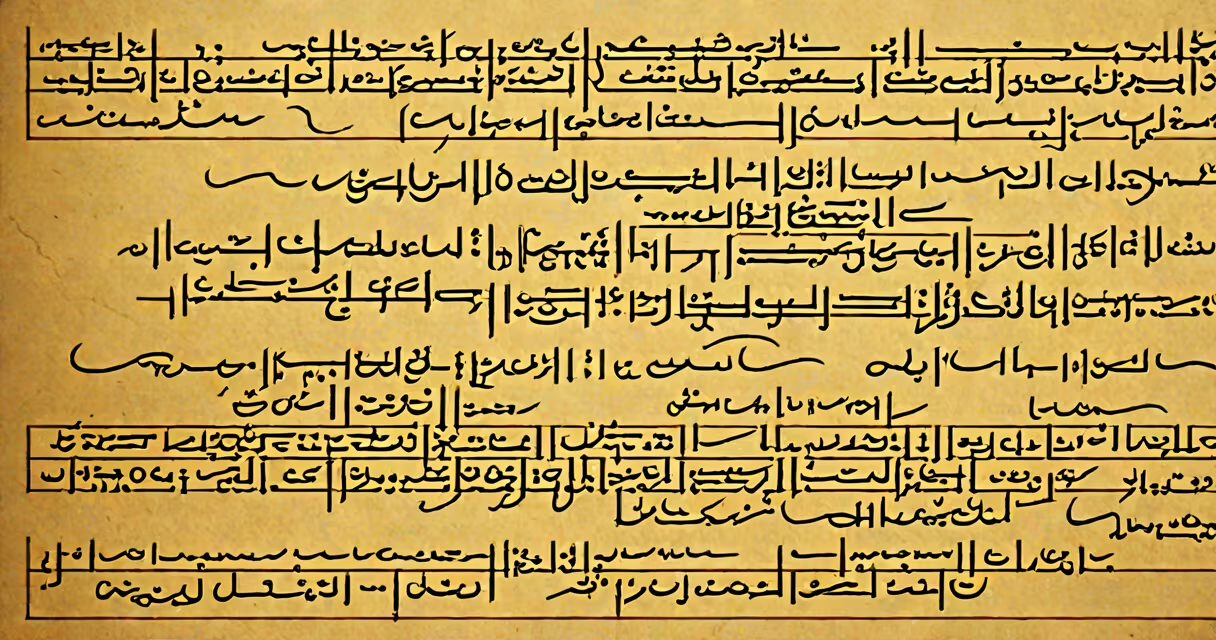
The meaning of Pashto lies in its role as a major Indo-Iranian language spoken by approximately 50 million people, primarily in eastern and southern Afghanistan and northwestern Pakistan. It is the official language of Afghanistan alongside Dari and uses a modified Arabic script with additional characters for sounds not found in Arabic.
Pashto belongs to the Eastern Iranian branch of the Indo-European language family. Its earliest known literary texts date to the 13th century, with the poet Khushal Khan Khattak being a foundational figure in classical Pashto literature. The language evolved from Old Pashto, which itself descended from Avestan and early Middle Persian influences. Modern Pashto retains a complex system of verb conjugation and noun cases, reflecting its ancient roots.
Despite regional variation, standard Pashto is based on the southern dialect of Kandahar and is taught in schools across Afghanistan and Pakistan. The language features a rich oral tradition, including poetry, proverbs, and storytelling, often passed down through generations without written documentation. This oral heritage remains central to Pashtun identity, even as literacy rates rise.
Pashto follows a subject-object-verb (SOV) word order, common among Indo-Iranian languages. Verbs agree with their subjects in person, number, and gender. For example, "د چاکر چې د ښه چاکر دی" translates to "He who eats well is healthy," demonstrating how clauses are embedded within larger structures using relative pronouns like "چې" (che).
Verbs are formed using prefixes and suffixes. The past tense of "to go" (د ګری) becomes "د ګریل" (he went), while the future tense adds the particle "د" (da) before the verb stem. The language also distinguishes between perfective and imperfective aspects, important for narrative precision. For instance, "د ګریل" indicates completed action, whereas "د ګریل چې" implies ongoing or habitual movement.
Word formation relies heavily on derivational morphology. The root "نن" (nan), meaning "today," becomes "نن ورځ" (nan warz) for "today's day" and "نن دوام" (nan doam) for "continuation of today." These patterns allow speakers to generate new terms without borrowing from other languages-a feature that supports linguistic autonomy.
Pashto is divided into two primary dialects: Northern (also called Pakhto) and Southern (also called Pashtu). The Southern dialect, spoken in Kandahar and Helmand provinces, is considered the standard form used in formal education and media. The Northern dialect, spoken in Paktia, Paktika, and parts of Khyber Pakhtunkhwa, includes distinct phonological shifts such as vowel reduction and consonant cluster simplification.
| Dialect | Region | Phonetic Features | Standard Use |
|---|---|---|---|
| Southern (Pashtu) | Kandahar, Helmand, Ghazni | Clear vowel articulation, retroflex stops | Official language, textbooks, broadcast media |
| Northern (Pakhto) | Paktia, Paktika, Khyber Pakhtunkhwa | Vowel dropping, fricative substitutions | Local speech, informal settings |
A third variant, Dari-Pashto mixed speech, emerges in urban centers like Kabul and Peshawar, where bilingual speakers blend vocabulary and syntax. This hybrid form is not standardized but functions as a functional lingua franca in daily interaction.
Pashto is the official language of Afghanistan and is used in government documents, judicial proceedings, and national broadcasts. The Afghan Ministry of Education mandates Pashto instruction in grades 1-12 in Pashto-majority provinces. According to UNESCO, over 60% of Afghan schoolchildren in the south receive instruction in Pashto, though access varies due to conflict and infrastructure gaps.
In Pakistan, Pashto is recognized as a provincial language in Khyber Pakhtunkhwa and federally protected under Article 37 of the Constitution. The Pashto Academy in Peshawar promotes literary development and standardizes spelling. However, usage in public administration remains limited compared to Urdu.
Non-governmental organizations such as the Pashto Research Institute in Jalalabad have documented over 4,000 unique idioms and proverbs in use across rural communities. One example is "د چاکر چې نه چاکري، نه چاکري" ("He who doesn't eat, doesn't live"), illustrating how moral lessons are encoded in everyday speech.
Pashto is frequently mistaken for Dari, another official language of Afghanistan. While both are Indo-Iranian languages, they differ in phonology and vocabulary. Dari uses Persian-based vocabulary and a different script (Perso-Arabic), whereas Pashto employs distinct phonemes like /p/, /ɬ/, and /χ/ that do not exist in Dari.
Another misconception is that Pashto lacks modern technical terminology. This is false. The Pashto Academy has developed over 12,000 standardized terms for science, medicine, and computing since 2005. For example, "کمپیوټر" (kompjuter) is used in formal contexts, and "انترنيت" (internet) appears in educational materials.
A lesser-known fact: Pashto was briefly used in the Soviet Union's radio broadcasts during the 1980s Afghan conflict. The USSR produced audio lessons in Pashto for resistance fighters, using native speakers trained in Moscow. These recordings remain part of archival collections at the National Library of Russia.
I once attended a Pashto poetry recital in Peshawar where a local elder performed a ghazal composed in the classical Dari-Pashto hybrid form. The piece began with "د چاکر چې د ښه چاکر دی" and ended with "د چاکر چې نه چاکري، نه چاکري." The audience responded with silence, then applause-proof that meaning in Pashto transcends translation. The emotional weight came not from individual words but from rhythm, intonation, and shared cultural memory.
For a concrete example, consider translating "I am learning Pashto" into Pashto: "زه پښتو یاد کوم." Breakdown: "زه" = I, "پښتو" = Pashto, "یاد کوم" = am learning. The structure reflects SOV order: subject (زه), object (پښتو), verb (یاد کوم). This sentence appears in the Afghan Ministry of Education's beginner textbook, *Pashto for All* (2021 edition).