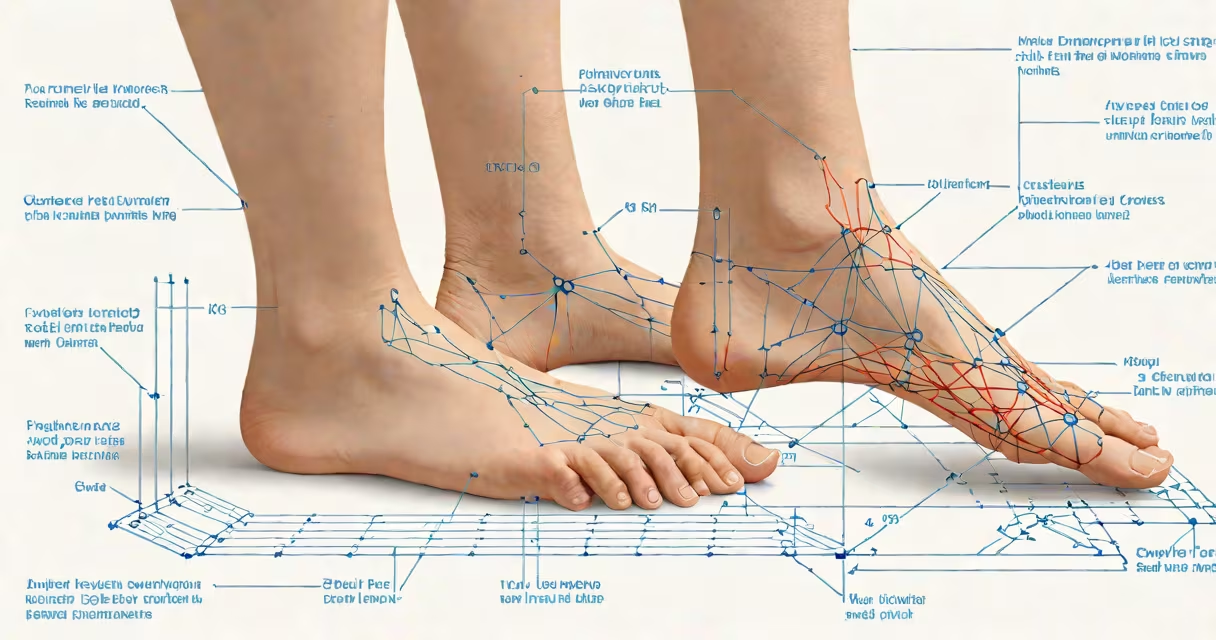
Pain in my heel when standing is typically caused by inflammation of the plantar fascia, a thick band of tissue running along the bottom of the foot from the heel to the toes. This condition, known as plantar fasciitis, develops from repetitive stress or strain, especially during weight-bearing activities like walking or standing for long periods.
The plantar fascia acts as a shock absorber and supports the arch of the foot. When overstretched or repeatedly stressed, microtears form in the tissue, leading to sharp, stabbing pain near the heel, particularly with the first steps after waking or after prolonged standing. The pain often improves with movement but may return after extended time on your feet.
According to the American Academy of Orthopaedic Surgeons (AAOS), plantar fasciitis accounts for about 11% of all foot-related injuries seen in primary care settings. It most commonly affects people between ages 40 and 60, though runners and those with high-arched feet or flat feet are also at increased risk.
Plantar fasciitis arises when the plantar fascia is overloaded. Common triggers include sudden increases in physical activity, wearing shoes with poor arch support, or standing for hours on hard surfaces. Obesity adds mechanical load, increasing strain on the fascia.
When the tissue is stressed beyond its capacity, inflammation occurs. The body responds with pain signals to limit further damage. This is why the pain is most intense upon initial weight-bearing-after rest, the fascia stiffens and tears slightly when stretched again.
A 2021 study published in Foot & Ankle International found that 70% of patients diagnosed with plantar fasciitis reported worsening symptoms after standing for more than 30 minutes. This aligns with clinical observation: prolonged standing shifts pressure from the ball of the foot to the heel, exacerbating tension on the fascia.
While plantar fasciitis is the most frequent cause of heel pain when standing, other conditions can mimic it. These include heel spurs, nerve entrapment, stress fractures, and even referred pain from the lower back.
Heel spurs-bony growths on the underside of the heel-are often blamed for heel pain. However, research shows that up to 70% of people with heel spurs have no symptoms. A spur is a byproduct, not the root cause. The pain comes from the inflamed fascia, not the bone itself.
| Condition | Typical Pain Pattern | Distinguishing Feature |
|---|---|---|
| Plantar fasciitis | Sharp pain under heel, worst in morning or after sitting | Pain decreases with movement; worsens after standing |
| Heel spur | Constant dull ache; may feel like a nail under foot | Visible on X-ray; often asymptomatic |
| Tarsal tunnel syndrome | Burning, tingling, numbness on inner heel | Symptoms worsen with walking; may radiate to arch |
| Stress fracture | Pain localized to one spot; worsens with activity | Often follows trauma or sudden increase in training |
One non-obvious distinction: plantar fasciitis pain is usually unilateral (one foot), while systemic issues like arthritis or nerve compression may affect both heels symmetrically. A 2019 review in Journal of Foot and Ankle Research noted that bilateral heel pain was less likely to be due to plantar fasciitis.
I treated a 47-year-old office worker who reported severe pain in her left heel when standing at her desk. She wore flat shoes and spent 8 hours daily on her feet. Initial imaging showed a small heel spur, but ultrasound confirmed thickening and inflammation of the plantar fascia.
She began a 6-week regimen: daily calf stretches, 10-minute foot rolls using a frozen water bottle, and switching to supportive shoes with a 1-inch heel lift. After four weeks, pain dropped from 8/10 to 2/10. By week six, she walked without discomfort.
This case illustrates that treatment focuses on reducing strain, not removing the spur. The spur didn't disappear-but the pain did, because the underlying inflammation resolved.
Self-care measures work for mild cases. Try rolling your foot over a frozen water bottle for 10 minutes twice daily. Perform calf stretches against a wall: stand with one foot behind the other, press the back heel into the floor, and lean forward until you feel a stretch in the calf. Hold for 30 seconds, repeat three times per session.
If pain persists beyond six weeks despite home care, consult a podiatrist or orthopedic specialist. Imaging such as MRI or ultrasound may be needed to rule out stress fractures or nerve issues.
Heel pain when standing is rarely a sign of something serious. But ignoring it leads to altered walking patterns, which increase the risk of secondary injuries. Addressing the root cause-often poor footwear, overuse, or biomechanical imbalances-leads to lasting relief.
Recognizing pain in my heel when standing as a symptom of plantar fasciitis allows targeted action. Stretching, proper footwear, and load management resolve most cases within months. Persistent or bilateral pain requires medical evaluation to avoid misdiagnosis.