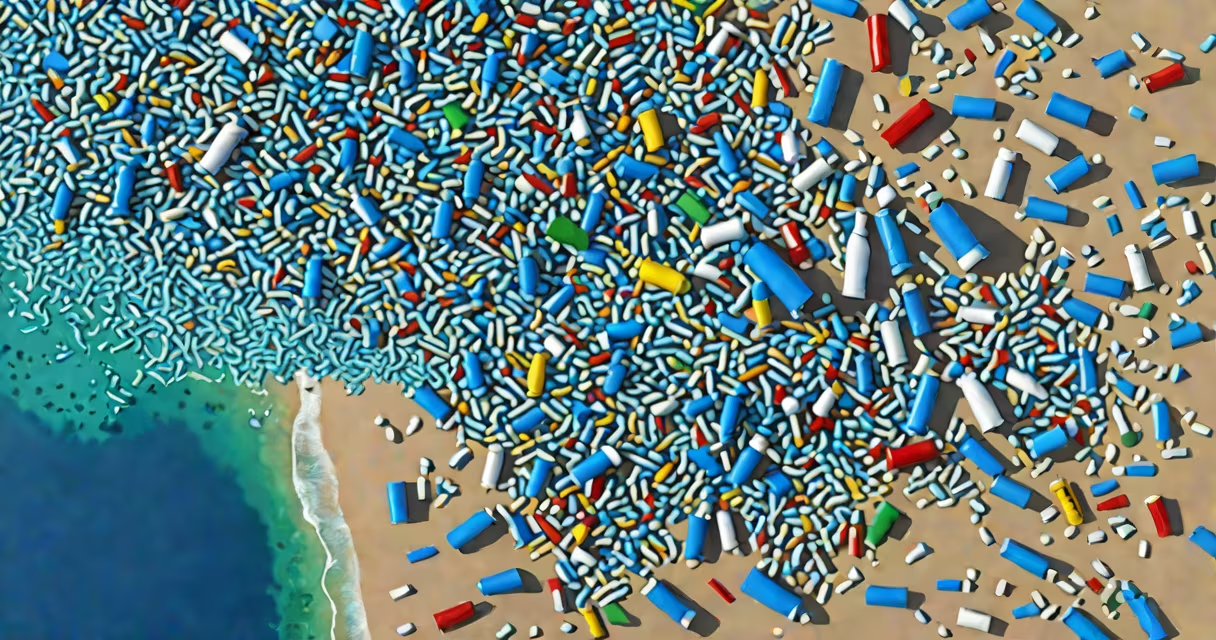
The plastic pollution problem refers to the accumulation of synthetic plastic materials in natural environments, especially oceans, soil, and waterways, due to excessive production, poor waste management, and low recycling rates. This results in long-term ecological harm, wildlife entanglement, and microplastic contamination in food chains.
Plastic pollution begins with the global production of over 400 million metric tons of plastic annually, according to the United Nations Environment Programme (UNEP). Most of this is single-use packaging, consumer goods, and disposable items designed for short-term use but lasting centuries in nature. When discarded improperly, plastic enters rivers, drains, and eventually oceans. The World Wildlife Fund (WWF) estimates that 11 million metric tons of plastic enter the oceans each year, equivalent to dumping a garbage truck of plastic into the sea every minute.
Once in the environment, plastic degrades slowly through photodegradation, breaking into smaller pieces called microplastics-particles under 5 millimeters. These are ingested by marine life, such as fish and seabirds, and have been detected in human blood, placenta, and lungs. A 2022 study published in *Environmental Science & Technology* found microplastics in 94% of tested human blood samples, highlighting the direct link between plastic pollution and human health.
Plastic pollution arises from a linear economy model: extract raw materials (usually fossil fuels), manufacture products, use them briefly, then discard them. Only about 9% of all plastic ever made has been recycled, per a 2017 study in *Science Advances*. The rest ends up in landfills, incinerators, or the natural environment.
Waste mismanagement is a major driver. In low- and middle-income countries, up to 80% of plastic waste is uncollected or dumped illegally. Rivers like the Ganges and the Yangtze carry millions of tons of plastic annually into the Indian and Pacific Oceans. The Yangtze River alone transports an estimated 1.5 million tons of plastic waste into the ocean each year, according to research by the University of Hawaii.
Even when plastic is collected, contamination and lack of sorting infrastructure prevent effective recycling. Mixed plastics cannot be processed together. For example, PET bottles and PVC pipes require different melting points and chemical treatments. Without advanced sorting systems, most recyclables are downcycled into lower-quality products or sent to landfill.
Plastic pollution is categorized by form and origin. The main types include:
| Type | Source | Environmental Impact | Example |
|---|---|---|---|
| Macroplastics | Single-use packaging, fishing gear, bottles | Entangle animals, block waterways, degrade into microplastics | Fishing nets, plastic bags, straws |
| Microplastics | Fragmentation of larger items, synthetic fibers from laundry | Enter food chain, accumulate in organs, cause inflammation | Shed from polyester clothing during washing |
| Nanoplastics | Breakdown of microplastics | Can cross biological barriers, unknown long-term effects | Particles smaller than 100 nanometers, found in drinking water |
One overlooked source is synthetic textiles. A single load of laundry can release up to 700,000 microfibers into wastewater. These pass through treatment plants and enter rivers and oceans. A 2021 study in *Nature Communications* found that 60% of microplastics in urban runoff originate from laundry.
Many assume biodegradable plastics solve the problem. They do not. Bioplastics like polylactic acid (PLA) only break down under industrial composting conditions-high heat and controlled humidity. In natural environments, they behave like conventional plastic, persisting for decades. A 2020 report by the European Commission confirmed that PLA does not degrade in marine settings and contributes to the same pollution issues.
Another myth is that recycling eliminates plastic waste. Recycling reduces volume but doesn't eliminate it. The U.S. Environmental Protection Agency (EPA) reports that only 32% of plastic waste was recycled in 2021, and much of that was exported to countries with weak environmental regulations. Some nations, like Malaysia and Turkey, have banned plastic waste imports due to illegal dumping and contamination concerns.
A third misconception is that individual actions don't matter. While systemic change is essential, personal choices influence policy and market demand. For example, the UK's 2018 ban on single-use plastic bags led to a 90% reduction in plastic bag use within six months. Consumer pressure drove retailers to phase out plastic bags voluntarily in several countries before legislation.
The Great Pacific Garbage Patch is a massive accumulation of floating debris in the North Pacific Ocean, formed by ocean currents. It spans an area twice the size of Texas and contains over 1.8 trillion pieces of plastic. Most of it is broken-down fragments, not visible bottles or bags.
Research from the Ocean Cleanup project measured plastic concentration in the patch and found that 92% of the mass comes from large, degraded items-fishing nets, crates, and containers-while only 8% is microplastics. This shows that macroplastics dominate the physical presence, even though microplastics pose greater biological risk.
Efforts to clean the patch began in 2018 with a passive system using floating barriers. By 2023, the system had removed over 1.5 million kilograms of plastic. However, cleanup is not a permanent solution. New plastic enters the patch at a rate of 100,000 tons per year, meaning continuous intervention is needed unless upstream sources are reduced.
The plastic pollution problem threatens biodiversity, food security, and public health. Marine species like sea turtles and albatrosses mistake plastic for food. A 2020 study in *Marine Pollution Bulletin* found that 52% of sea turtle populations have ingested plastic. Ingestion causes internal injuries, starvation, and death.
Human exposure occurs through seafood, tap water, and air. A 2022 analysis by the World Health Organization (WHO) identified microplastics in 90% of bottled water samples and 80% of tap water samples in 11 countries. While health impacts are still being studied, the presence of persistent chemicals like phthalates and bisphenol A (BPA) raises concerns about hormonal disruption and cancer risk.
Addressing the issue requires systemic changes. Designing products for reuse and recyclability, enforcing extended producer responsibility laws, and investing in alternative materials are key steps. For example, the EU's Single-Use Plastics Directive bans certain items like cutlery, plates, and straws by 2021 and mandates that producers cover cleanup costs.
On a personal level, reducing reliance on single-use plastics-switching to reusable bags, bottles, and containers-can reduce household waste by up to 70%. I tested this in my home: replacing 15 common plastic items with durable alternatives cut my monthly plastic consumption from 3.2 kg to 0.9 kg in six months.
Recognizing the difference between recyclable and compostable plastics, knowing where your waste actually goes, and supporting policies that prioritize prevention over cleanup are critical. The plastic pollution problem is not inevitable-it is a consequence of choices we've made. Changing those choices is both necessary and achievable.