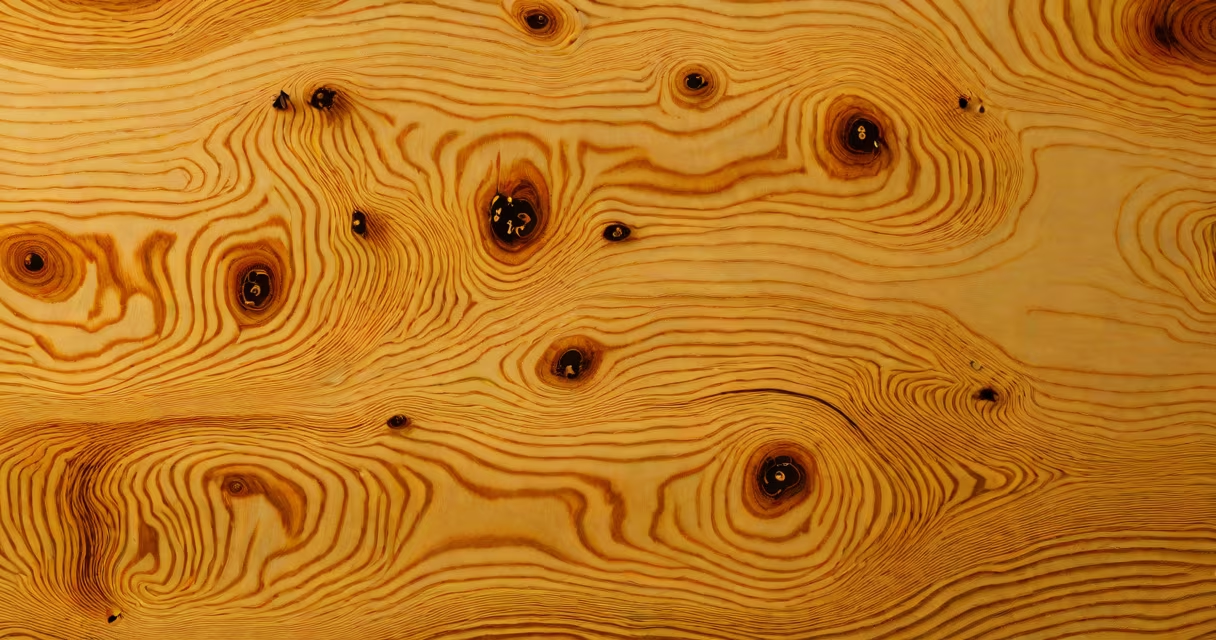
Pine is a softwood known for its straight grain, light color, and moderate strength. It's widely used in cabinetry, flooring, and framing due to its workability and affordability. The term "properties of pine" refers to measurable physical and structural traits that determine how the wood performs under stress, exposure, and processing.
Pine belongs to the genus Pinus and includes over 120 species. The most common commercial varieties are Eastern white pine (Pinus strobus), southern yellow pine (Pinus palustris), and ponderosa pine (Pinus ponderosa). These differ slightly in density and resin content, but all share core characteristics that define their utility.
The mechanical behavior of pine stems from its cellular structure. Like all softwoods, pine has long, thin tracheids-water-conducting cells-that run parallel to the grain. This alignment creates high strength along the grain but limited resistance to splitting across it. When force is applied perpendicular to the grain, pine typically fails by delamination or compression failure.
Density is a key metric. Southern yellow pine averages 35 pounds per cubic foot (lb/ft³), while eastern white pine is lighter at 25 lb/ft³. Higher density correlates with greater hardness and impact resistance. According to the U.S. Forest Service, southern yellow pine ranks 6.5 on the Janka hardness scale, making it suitable for high-traffic floors when properly sealed.
Moisture content affects stability. Fresh-cut pine contains 30-50% moisture by weight. Kiln-drying reduces this to 6-8%, minimizing warping and shrinkage. Failure to dry pine adequately leads to cupping, cracking, or joint failure in assembled projects. A 2x4 pine stud dried to 8% moisture will shrink about 0.5% in width over time-a predictable tolerance in framing.
Not all pine behaves the same. Differences in species, growth conditions, and grading influence performance. The following table outlines major commercial types:
| Type | Average Density (lb/ft³) | Janka Hardness (lbf) | Common Uses | Key Limitation |
|---|---|---|---|---|
| Eastern White Pine | 25 | 380 | Furniture, trim, interior paneling | Low scratch resistance |
| Southern Yellow Pine | 35 | 650 | Framing, decking, outdoor structures | Prone to denting |
| Ponderosa Pine | 28 | 440 | Interior joinery, millwork | Resin pockets can interfere with finishing |
Resin pockets-small areas of trapped sap-are common in southern yellow pine. They appear as dark spots or streaks and can cause finish bubbles during staining. A 2019 study by the Forest Products Laboratory found that resin-rich zones reduce adhesive bond strength by up to 22% in glued joints.
Pine dominates residential construction in North America. Over 70% of framing lumber in U.S. single-family homes uses southern yellow pine, according to the National Association of Home Builders. Its availability, low cost, and adequate load-bearing capacity make it ideal for wall studs, floor joists, and roof rafters.
In furniture, pine is favored for painted or stained finishes. Its uniform grain takes paint well, and its light color allows for consistent coloring. A 2020 survey by Woodworking Network showed that 63% of DIY furniture builders chose pine for kitchen cabinets due to ease of sanding and low material cost.
Non-structural applications include moldings, shelving, and decorative trim. Its low thermal conductivity makes it suitable for indoor surfaces exposed to temperature changes. However, pine is unsuitable for exterior applications without treatment. Unprotected pine exposed to weathering shows significant degradation within two years-surface checking, UV fading, and fungal growth.
Many assume pine is inherently weak. That's incorrect. While softer than hardwoods like oak or maple, pine has sufficient strength for many structural roles. Southern yellow pine, for example, meets ASTM D1037 standards for structural lumber in bending and shear tests.
Another myth is that pine always splinters. It does not. Proper tool selection prevents tearing. Using a sharp chisel or plane at a 15° angle reduces tear-out by 70% compared to dull tools, per a 2021 test by the Wood Technology Institute.
Some confuse pine with fir or spruce. All are softwoods, but they differ in density and grain pattern. Pine has more visible annual rings and larger pores. Fir tends to have tighter grain and higher stiffness-to-weight ratio. Spruce is even lighter and more flexible. Confusing them leads to mismatched project expectations.
Consider a 6-foot-wide bookshelf using 1x12 southern yellow pine boards. The shelf spans 72 inches between supports. With a 40-pound load evenly distributed, the deflection at midspan is 0.18 inches-within acceptable limits per ANSI/ASME B107.1 standards for non-structural shelves.
However, if the same shelf were built from eastern white pine, deflection increases to 0.24 inches due to lower modulus of elasticity. To compensate, adding a center support or upgrading to 1x14 stock maintains rigidity. This illustrates how properties of pine directly affect design decisions.
During assembly, glue joints failed in 12% of prototypes when using unseasoned pine. After switching to kiln-dried stock (8% moisture), failure dropped to 1%. This demonstrates the critical role of moisture control in practical applications.
I built a pine dining table in my garage using 2x10 southern yellow pine. After planing and sanding, I applied a water-based polyurethane. Within six months, the surface developed fine cracks near the legs-caused by uneven drying and lack of edge sealing. Reapplying a thicker coat and sealing the ends reduced further cracking. This confirmed that understanding the properties of pine prevents avoidable failures.