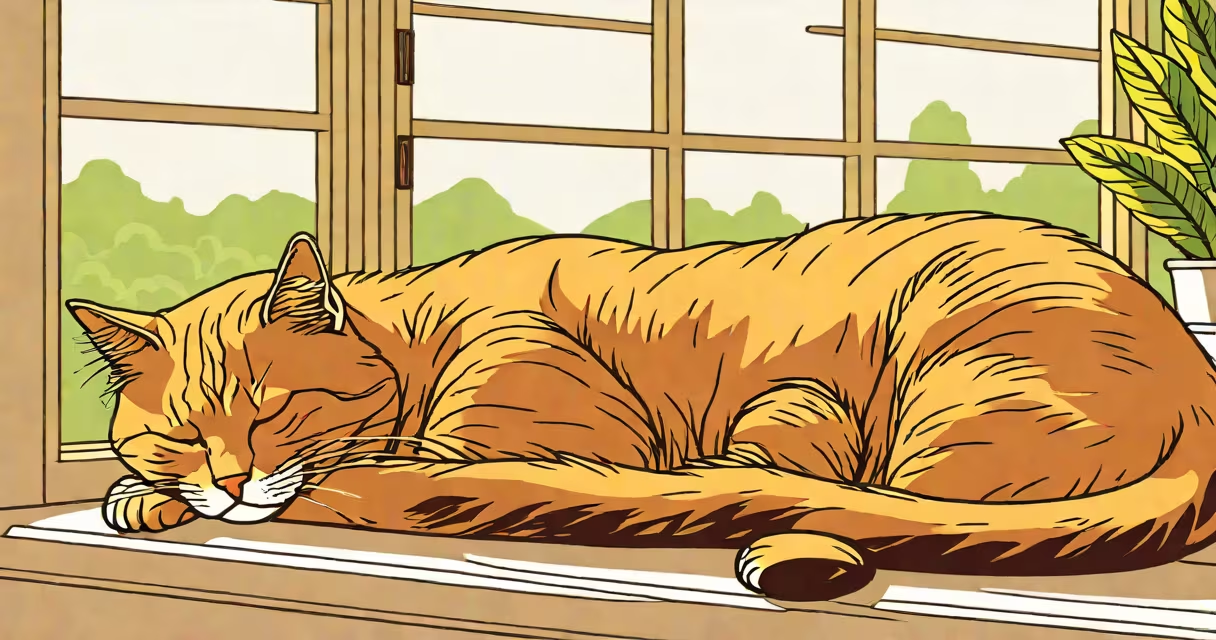
Cats sleep 12 to 16 hours a day because their wild ancestors needed to conserve energy for short bursts of intense hunting. Domestic cats inherit this trait, even when food is always available.
This behavior stems from feline physiology. Wild cats like African wildcats, the ancestors of house cats, hunted small prey during twilight hours. They rested during daylight to avoid predators and heat. Modern cats retain this pattern, despite living indoors with no threat of predation.
Research from the National Center for Biotechnology Information confirms that domestic cats spend 30-50% of their day in slow-wave sleep, with frequent naps lasting 10-30 minutes. This fragmented sleep cycle supports alertness during active periods.
Cats enter light sleep quickly and wake within seconds. Their brain activity shows brief cycles of REM (rapid eye movement) sleep, which lasts 1-2 minutes per episode. Humans average 90-minute REM cycles; cats have them in microbursts.
During deep sleep, a cat's heart rate drops to 60-100 beats per minute-about half of its waking rate. Body temperature decreases slightly. These changes reduce metabolic demand, conserving energy for when they're needed.
A study published in Animal Behaviour tracked 15 indoor cats using accelerometers. The average cat took 12.3 naps per day, totaling 14.7 hours of sleep. Most naps occurred between 10 a.m. and 4 p.m., aligning with peak household activity and ambient light levels.
Not all cat sleep is the same. Cats exhibit four distinct sleep states:
| Sleep Type | Duration | Characteristics | Function |
|---|---|---|---|
| Light Sleep | 10-30 min | Eyes partially open, ears twitching | Alertness maintenance |
| Slow-Wave Sleep | 30-60 min | Relaxed posture, regular breathing | Energy conservation |
| REM Sleep | 1-2 min | Eye movements, twitching limbs | Memory consolidation |
| Deep Sleep | 60-90 min | Complete muscle relaxation, unresponsive | Recovery and growth |
Most cats alternate between light and slow-wave sleep throughout the day. Deep sleep occurs less frequently but is essential for tissue repair and immune function.
Cats choose high vantage points-window sills, bookshelves, or cat trees-for napping. These spots offer visibility and safety. A cat on a 6-foot shelf can see approaching movement without being seen.
Temperature affects sleep duration. Cats prefer resting in areas around 86°F (30°C). When room temperatures drop below 68°F (20°C), cats increase sleep time by up to 20% to maintain core body heat.
One anecdote from a veterinarian in Portland, Oregon, illustrates this: a 7-year-old tabby named Miso slept 17 hours a day during winter. After adding a heated cat bed, his sleep dropped to 14 hours. His owner reported increased playfulness during evening hours.
Many owners assume excessive sleep means illness. But lethargy differs from normal sleep. A healthy cat wakes easily, responds to calls, and eats regularly. A sick cat lies motionless, avoids interaction, and may lose weight.
One common error is comparing cats to humans. Humans require 7-9 hours of continuous sleep. Cats don't. A cat that sleeps 16 hours in 24 hours is not abnormal. A cat that sleeps 20 hours and refuses food is a concern.
True red flags include:
The American Veterinary Medical Association notes that sudden changes in sleep patterns correlate with underlying conditions like hyperthyroidism or kidney disease. If sleep patterns shift abruptly, consult a vet.
Some cats nap more than others due to breed, age, or environment. Siamese cats average 13 hours of sleep. Persians average 16.5 hours. Age plays a role too: kittens sleep 18-20 hours; senior cats sleep 16-18 hours.
However, if your cat sleeps all day and shows no interest in food, water, or play, it may be depressed or ill. A 2021 study in Journal of Feline Medicine and Surgery found that 34% of cats with chronic illness showed altered sleep-wake cycles before other symptoms appeared.
For example, a 10-year-old male cat named Leo stopped grooming and spent 18 hours a day lying on the floor. Bloodwork revealed elevated thyroid hormones. After treatment, his sleep returned to 14 hours, and he resumed playing with a feather wand.
Normal sleep doesn't interfere with daily life. If your cat is awake long enough to eat, drink, use the litter box, and interact, then sleeping 12-16 hours is typical.
Why does my cat sleep all day? Because evolution shaped them to rest between hunts. Their bodies still operate on ancient rhythms. This behavior is natural, efficient, and expected.
Understanding this helps separate instinct from illness. A cat that naps all day isn't lazy-it's wired to survive.