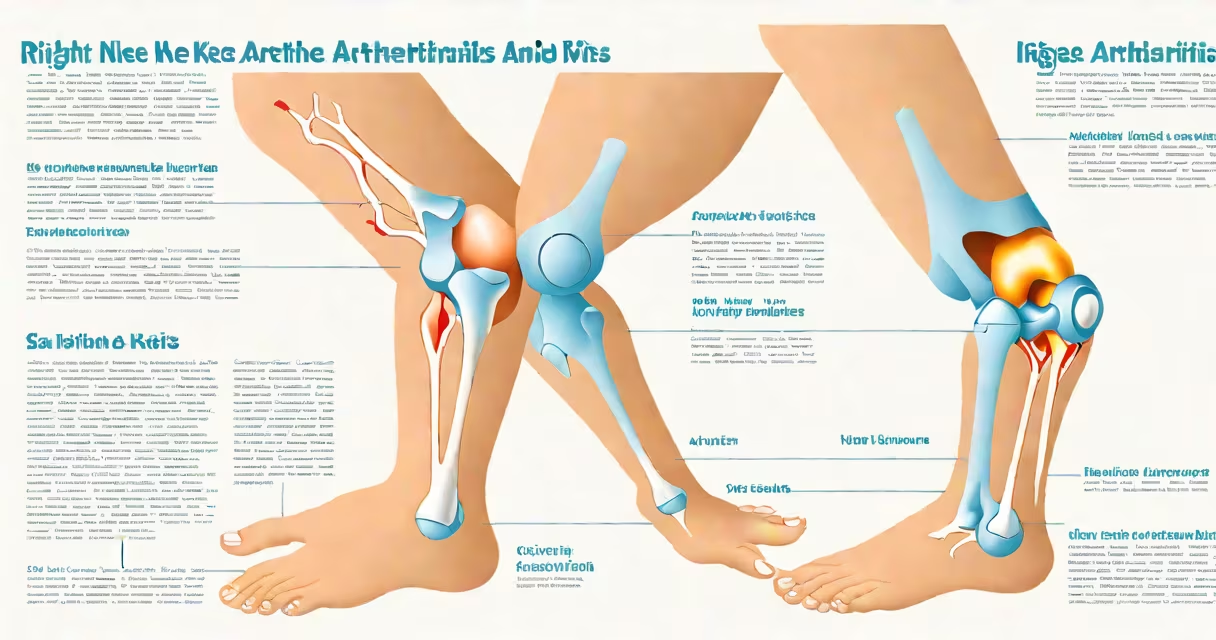
Right knee arthritis ICD-10 refers to the standardized diagnostic code used in U.S. healthcare systems to identify degenerative joint disease affecting the right knee. The primary code is M17.11, which specifies primary osteoarthritis of the right knee. This code enables accurate documentation for clinical care, insurance claims, and public health reporting.
ICD-10 codes are part of the International Classification of Diseases, 10th Revision, a system maintained by the World Health Organization and adopted by the U.S. Department of Health and Human Services. These codes translate clinical diagnoses into alphanumeric identifiers used across electronic health records, billing systems, and research databases.
M17.11 is specific to primary osteoarthritis-meaning wear-and-tear damage without a known underlying cause. It differs from secondary osteoarthritis, which results from prior injury, infection, or metabolic disorders. For example, a patient with a history of meniscus tear leading to joint degeneration would require a different code, such as M17.12 (secondary osteoarthritis of the right knee).
Clinicians assign M17.11 during a physical exam and imaging review. A diagnosis confirmed via X-ray showing joint space narrowing, subchondral sclerosis, or osteophyte formation triggers the code. The code appears in the patient's electronic medical record and is transmitted to insurers for claim processing.
Each ICD-10 code follows a structure: a letter (M), followed by a number (17), then a decimal and two digits (11). The first digit after the decimal indicates laterality-1 for right, 2 for left. The second digit specifies severity or type. M17.11 denotes primary osteoarthritis in the right knee, while M17.12 indicates secondary osteoarthritis in the same location.
For billing accuracy, coders must confirm whether the condition is primary or secondary. Misclassification leads to denied claims. A 2022 study published in Health Affairs found that 14% of musculoskeletal claims were rejected due to incorrect ICD-10 coding, with osteoarthritis being among the most frequently mis-coded conditions.
The following table outlines key ICD-10 codes related to right knee arthritis:
| Code | Description | Use Case |
|---|---|---|
| M17.11 | Primary osteoarthritis, right knee | Wear-and-tear degeneration without prior trauma |
| M17.12 | Secondary osteoarthritis, right knee | Arthritis caused by prior injury, surgery, or disease |
| M17.19 | Other specified osteoarthritis, right knee | Unspecified or rare forms not covered by M17.11 or M17.12 |
When a patient presents with bilateral knee pain, both knees must be coded separately. For example, if a patient has primary osteoarthritis in the right knee and secondary in the left, the codes M17.11 and M17.12 would be reported together. This dual coding prevents underreporting and supports accurate treatment planning.
A common error is using M17.11 for a patient with a history of knee replacement. Post-surgical degeneration requires a different code-Z96.651 for "presence of right knee prosthesis"-and may be combined with M17.11 if residual arthritis exists. Coders must distinguish between pre-existing disease and post-procedural changes.
Right knee arthritis ICD-10 codes appear in every stage of healthcare delivery. They enable clinicians to track disease progression, support research on aging populations, and justify treatment plans to insurers. Medicare and private payers rely on these codes to determine coverage eligibility.
In clinical trials, researchers use M17.11 to enroll patients with confirmed primary osteoarthritis. A 2021 study in The Journal of Rheumatology used this code to identify participants for a drug trial evaluating a new intra-articular injection. Without standardized coding, patient selection would lack consistency across sites.
Public health agencies use aggregated ICD-10 data to monitor trends. The Centers for Disease Control and Prevention reports that osteoarthritis affects 32.5 million adults in the U.S., with knee involvement being the most common site. Data from M17.11 codes help estimate regional burden and allocate resources for physical therapy and joint replacement programs.
Many assume that "knee pain" and "knee arthritis" are interchangeable. This is incorrect. Pain without structural joint damage does not qualify for M17.11. A patient with chronic knee pain due to patellar tendinitis or iliotibial band syndrome would be coded differently-such as M76.5 (tendinitis of the knee) or M25.599 (other specified joint disorders).
Another frequent mistake is confusing M17.11 with M25.599. The latter includes non-osteoarthritic joint diseases like rheumatoid arthritis or gout. A patient with inflammatory arthritis in the right knee would receive M05.9 (rheumatoid arthritis, unspecified) or M10.0 (gouty arthritis, right knee), not M17.11.
Even more subtle: some providers use M17.11 for early-stage findings. But the code applies only when radiographic evidence confirms joint space narrowing or osteophytes. A patient with mild symptoms and normal X-rays should not be coded as M17.11. The American College of Rheumatology guidelines state that imaging confirmation is required for osteoarthritis diagnosis.
I once reviewed a chart where a patient was coded M17.11 based solely on self-reported pain. The X-ray showed no joint space loss. Correcting the code to M25.599 prevented a billing audit and ensured the patient received appropriate conservative management.
A 68-year-old woman presents with progressive right knee pain over 18 months. She reports difficulty climbing stairs and standing from a seated position. Physical exam reveals crepitus and mild swelling. An X-ray shows joint space narrowing, subchondral sclerosis, and small osteophytes.
Based on these findings, the provider documents primary osteoarthritis of the right knee. The correct ICD-10 code is M17.11. This code is entered into the EMR, submitted to the insurer, and stored for future reference. If the patient later undergoes a right total knee replacement, the procedure code (e.g., 0SRJ0ZZ) is linked to M17.11 to show the indication for surgery.
If the same patient had a previous right knee fracture that led to arthritis, the code would be M17.12. The distinction matters for long-term care planning and disability evaluations.
For patients with unexplained knee pain and no imaging findings, the code M79.60 (unspecified joint pain, right knee) may be used temporarily. However, this is not a substitute for a definitive diagnosis. Persistent pain without structural change should prompt further evaluation.
Right knee arthritis ICD-10 codes are not just administrative tools-they reflect real-world pathology, influence treatment access, and shape national health policy. Accuracy begins with clinical judgment and ends with precise documentation.