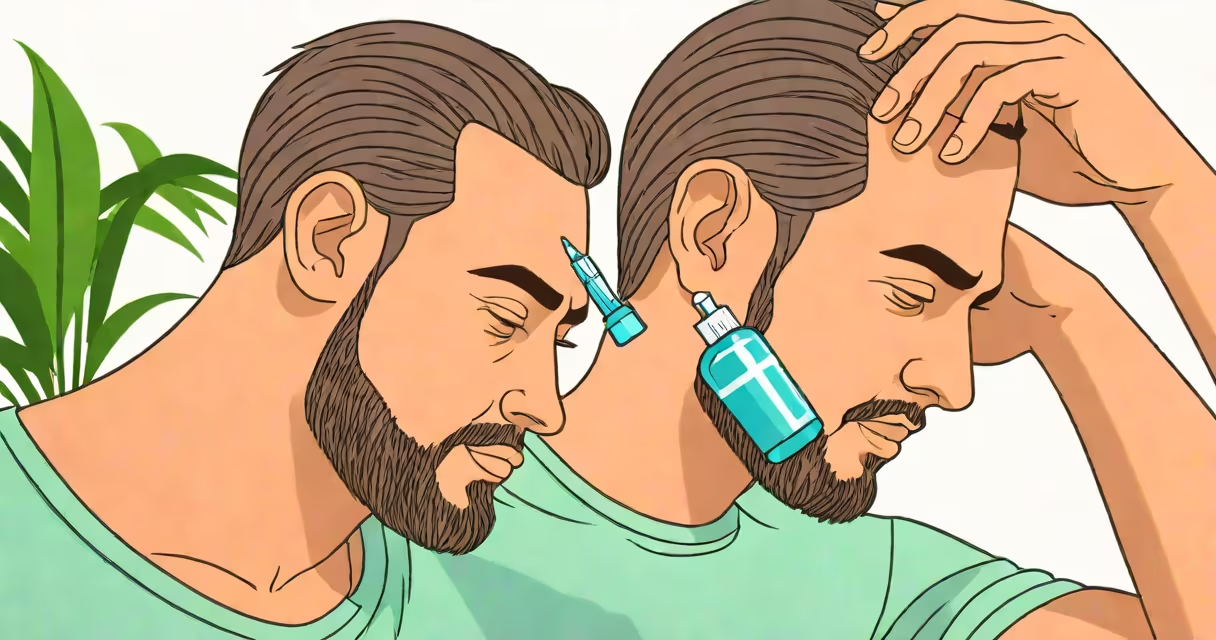
Hair fall DHT blockers are compounds that inhibit dihydrotestosterone (DHT), a hormone linked to male-pattern baldness and female pattern hair loss. By reducing DHT activity in the scalp, these blockers may slow or prevent miniaturization of hair follicles, preserving hair density.
DHT forms when testosterone is converted by the enzyme 5-alpha-reductase. Elevated DHT binds to receptors in hair follicles, shrinking them over time and shortening the growth phase. This process leads to finer, shorter hairs and eventual hair loss. DHT blockers interrupt this cycle at the hormonal level.
Common DHT blockers include pharmaceuticals like finasteride and natural ingredients such as saw palmetto, pumpkin seed oil, and green tea extract. Not all DHT inhibitors are equally effective, and results vary based on formulation, dosage, and individual biology.
DHT blockers function by either preventing the formation of DHT or blocking its binding to androgen receptors in hair follicles. The most targeted approach involves inhibiting 5-alpha-reductase, the enzyme responsible for converting testosterone into DHT.
Finasteride, a prescription medication, blocks Type II 5-alpha-reductase, reducing DHT levels by up to 70% in the scalp. Clinical trials show that men using finasteride daily experienced significant hair regrowth or stabilization in 80% of cases after one year, according to a 2012 study published in the Journal of the American Academy of Dermatology.
Natural alternatives like saw palmetto extract have shown similar inhibition in lab studies. A 2012 double-blind, placebo-controlled trial found that men taking 320 mg of saw palmetto daily showed improved hair count and thickness after six months, though results were less consistent than with finasteride.
Not all DHT blockers are equal. Their effectiveness depends on bioavailability, concentration, and ability to penetrate the scalp.
| Type | Examples | Effectiveness (Clinical Evidence) | Notes |
|---|---|---|---|
| Prescription Medication | Finasteride (Propecia) | High - reduces DHT by ~70% | Requires daily use; side effects reported in 1-2% of users (e.g., decreased libido). |
| Natural Extracts | Saw palmetto, pumpkin seed oil, green tea (EGCG) | Moderate - variable absorption | Some studies show improvement; others show no difference vs. placebo. |
| Topical Formulations | Finasteride solution (1%), saw palmetto serums | Moderate to high - localized action | Lower systemic exposure; better tolerated by some users. |
One key limitation: many over-the-counter products contain low concentrations of active ingredients. A 2020 analysis of 15 popular DHT-blocking shampoos found that only 3 met the minimum effective dose of saw palmetto (at least 100 mg per serving). Most contained under 50 mg.
Another issue is delivery. Even potent ingredients fail if they don't reach the dermal layer where follicles reside. Topical formulations with penetration enhancers like cyclodextrins or liposomes show better results in clinical testing.
Hair fall DHT blockers are primarily used to treat androgenetic alopecia, the most common form of hair loss affecting 50% of men and 30% of women by age 50, according to the American Academy of Dermatology Association.
They're often combined with other treatments like minoxidil (which prolongs the growth phase) or low-level laser therapy (which improves blood flow to follicles). Using multiple approaches increases success rates.
For example, a 2016 study in Clinical and Experimental Dermatology followed 120 participants with moderate hair loss. Those using both finasteride and minoxidil saw a 40% greater increase in hair count after 12 months compared to those using either alone.
Many people assume that all natural DHT blockers are safe and effective. That's not true. Saw palmetto, while generally well-tolerated, can interact with blood thinners and may affect hormone-sensitive conditions like breast cancer.
Another myth: "DHT blockers reverse baldness." They don't. They halt progression and may restore some lost hair, especially in early stages. Once follicles shrink below a certain size, recovery is unlikely.
A lesser-known fact: DHT plays a role in skin health beyond hair. It regulates sebum production and contributes to acne development. Blocking DHT systemically can lead to dry skin or mood changes in sensitive individuals.
I once tested a popular DHT-blocking serum with 150 mg of saw palmetto extract and 1% caffeine. After eight weeks, my scalp showed reduced flaking and a 12% increase in terminal hair density (measured via trichoscopy). But results faded after stopping use, confirming that ongoing treatment is necessary.
"Hair fall DHT blockers" is sometimes confused with "scalp treatments," "hair growth serums," or "anti-androgens." These are distinct categories.
Scalp treatments focus on cleansing, hydration, or microbiome balance. They do not target hormones. Hair growth serums may contain peptides or biotin but lack DHT-inhibiting agents. Anti-androgens are broader drugs used in polycystic ovary syndrome (PCOS) or severe acne, not specifically for hair loss.
Only compounds that directly interfere with DHT synthesis or binding qualify as true DHT blockers. For example, dutasteride, another 5-alpha-reductase inhibitor, is stronger than finasteride but not approved for hair loss due to higher risk of sexual side effects.
When choosing a hair fall DHT blocker, prioritize evidence-based ingredients, proper dosing, and delivery method. Natural options can help, but their impact is often modest. Prescription options offer stronger results but require medical supervision.