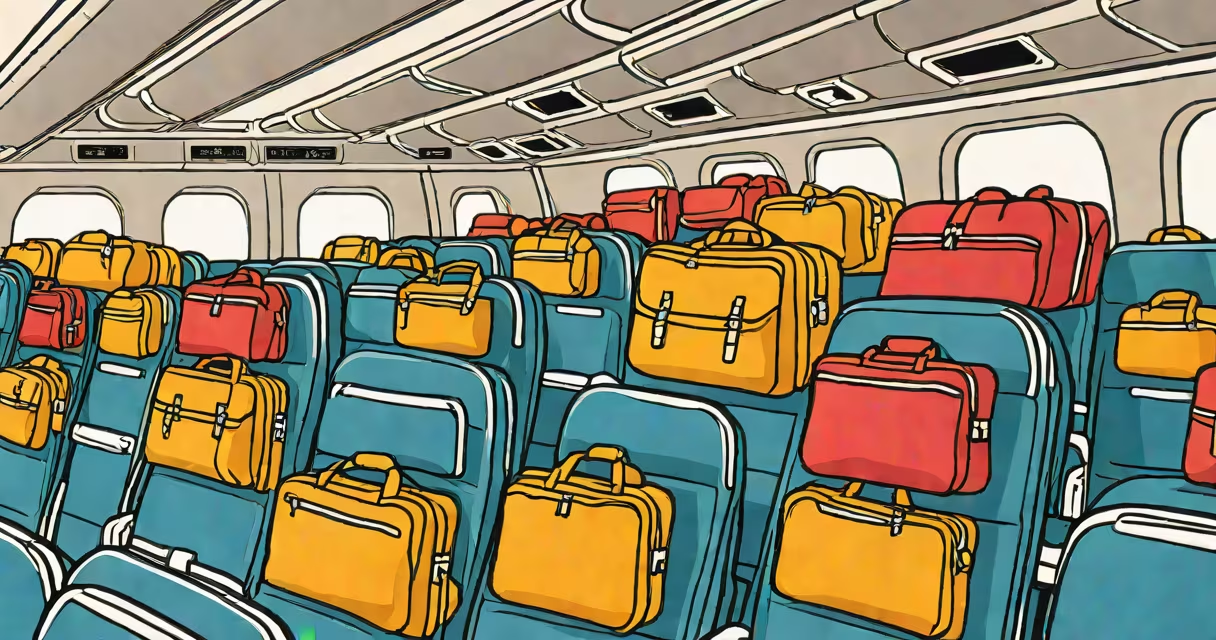
A carry on bag in flight is a personal piece of luggage you bring into the cabin, stored either under the seat in front of you or in the overhead bin. Most airlines allow one carry on bag plus one personal item, such as a purse or laptop bag. The standard dimensions are 22 x 14 x 9 inches (56 x 35 x 23 cm), though exact limits vary by carrier.
The Transportation Security Administration (TSA) enforces size and safety standards for carry on bags in U.S. domestic flights. Bags exceeding these dimensions may be refused at the gate or require check-in. International flights follow similar guidelines set by the International Air Transport Association (IATA), which recommends the same maximum size for most passenger aircraft.
Carry on bags are designed to avoid delays from lost luggage, reduce baggage handling costs, and speed up boarding. They're essential for travelers who want to access valuables, medications, or electronics during the flight. Airlines like Delta, United, and American enforce strict size checks at security checkpoints and boarding gates.
When you arrive at the airport, you pass your carry on bag through the TSA screening checkpoint. It goes through X-ray inspection, and if it contains prohibited items, it gets flagged. If the bag meets size and weight requirements, it proceeds to the gate. Once aboard, you stow it in the overhead bin or under the seat.
Most airlines assign boarding groups based on seat location and ticket type. Passengers with priority boarding or premium seating often board earlier, giving them better access to overhead bins. This creates a queue system where early birds secure space before others arrive.
Some airlines charge for carry on bags if they exceed size limits or if you're flying with a low-cost carrier. Spirit Airlines, for example, charges $35 for a carry on bag on domestic routes unless purchased in advance. Frontier Airlines allows one free carry on bag only if booked with a paid fare.
Carry on bags come in several forms, each suited to different travel styles:
| Type | Dimensions | Best For | Common Examples |
|---|---|---|---|
| Standard Rolling Carry On | 22 x 14 x 9 in (56 x 35 x 23 cm) | Business trips, weekend getaways | Rimowa Essential, Samsonite Lite, Away Small |
| Roll-aboard with Wheels & Handle | 24 x 16 x 10 in (61 x 41 x 25 cm) | Longer trips, families | Travelpro Maxlite 5, Briggs & Riley Baseline |
| Compact Backpack | 18 x 12 x 8 in (46 x 30 x 20 cm) | Urban travel, hiking, short stays | Fjällräven Kånken, Osprey Farpoint 40 |
| Convertible Duffel | 20 x 15 x 10 in (51 x 38 x 25 cm) | Adventure travel, gym-to-plane use | Timbuk2 Travel Duffel, Cotopaxi Allpa |
Not all bags labeled "carry on" meet airline standards. A bag that fits in a hotel room's closet may still fail the gate check. Always measure your bag with a ruler or tape measure before traveling. Even a half-inch over the limit can result in being asked to check it.
I once flew from Chicago to Seattle with a duffel bag labeled "carry on" that fit in my car trunk. At the gate, the agent measured it and said it was 0.7 inches too tall. I had to check it at the counter, losing access to my medication during the flight. That experience taught me to verify dimensions using the airline's official website, not product descriptions.
Carry on bags are used to transport essential items that passengers don't want to risk being lost or delayed. These include prescription drugs, electronics, documents, and clothing needed for immediate wear. They're especially useful on connecting flights, where checked luggage may be delayed or misrouted.
Business travelers rely on carry on bags to stay productive. A laptop, charger, notebook, and toiletries go in the bag. When arriving at a destination, they can exit the plane and walk directly to a meeting without waiting for baggage claim.
Family travelers use carry on bags to store snacks, diapers, toys, and extra clothes for children. Some parents even pack a small blanket or noise-canceling headphones to soothe fussy kids during turbulence.
Many people assume that any bag smaller than a suitcase qualifies as a carry on. That's false. Size matters more than appearance. A large backpack with wheels may look like a carry on but exceed dimensions. Airlines measure bags at the gate, not at home.
Another myth is that all airlines accept the same carry on size. They do not. Southwest Airlines allows bags up to 24 x 16 x 10 inches, while JetBlue restricts to 22 x 14 x 9 inches. Always confirm the policy on the airline's website before departure.
Some travelers think they can bypass size limits by folding or compressing their bag. This doesn't work. The TSA measures the bag in its expanded state. A compressed bag still counts as oversized if it exceeds the limit when fully extended.
One non-obvious rule: liquids in carry on bags must be in containers under 3.4 ounces (100 ml) and placed in a clear quart-sized bag. This applies even if the liquid is in a travel-sized bottle. Violations lead to removal at security.
Prohibited items include sharp objects (knives, scissors), firearms, explosives, flammable materials, and certain electronic devices. Lithium-ion batteries over 100 watt-hours must be carried in the cabin, not checked.
Alcohol over 140 proof is banned. Liquids over 3.4 ounces must be checked. Medications in original packaging are permitted but must be declared if questioned. The TSA provides a full list of restricted items on its website.
Understanding what is carry on bag in flight ensures smoother travel. Always verify size, weight, and contents against airline policies. Use a measuring tape, not assumptions. Keep essentials accessible and avoid last-minute surprises.
Knowing the rules prevents delays, fees, and stress. A properly packed carry on bag makes travel faster, safer, and more predictable.